
Precision Automotive Plastic Parts Manufacturer You Can Trust
An automotive plastic parts manufacturer is a facility that designs and produces vehicle components from engineered polymers, from interior trim to under-hood modules. It works by using injection molding to shape durable, lightweight parts that replace heavier metal equivalents. This process delivers benefits like reduced vehicle weight, improved fuel efficiency, and design flexibility for complex shapes. Automotive plastic parts manufacturers help you create custom, corrosion-resistant components with high precision for any vehicle system.
Why Precision Matters in Plastic Component Fabrication for Vehicles
For any reputable automotive plastic parts manufacturer, precision in component fabrication is non-negotiable because it directly dictates vehicle safety and assembly integrity. A dashboard panel molded to within a hair’s breadth ensures perfect fit without rattles, while a precisely machined connector housing guarantees flawless electrical contact. Mile-wide tolerances invite catastrophic part failure under vibration and thermal stress, leading to recalls. Every micron of exactitude in an injection mold translates to zero assembly line friction for automakers. True engineering lies not just in meeting a spec, but in the silent reliability that absolute dimensional accuracy delivers over a decade of road use.

Key Quality Benchmarks for Dashboards, Bumpers, and Trim
For dashboards, bumpers, and trim, dimensional stability and surface fidelity are non-negotiable. Dashboard panels require zero warpage to ensure flush fitment with airbag seams and infotainment housings, while bumpers must endure impact testing without cracking at extreme temperatures. Trim pieces demand flawless grain matching and colorfastness under UV exposure. Consistent wall thickness control prevents sink marks and weak points across all three components. The following benchmarks define production success:
- Dashboard: ±0.1mm tolerance on clip retention features
- Bumper: IZOD impact resistance above 400 J/m at -20°C
- Trim: gloss level within 2 units of the master standard
How Dimensional Accuracy Affects Assembly and Safety
Dimensional accuracy directly governs whether plastic components align during vehicle assembly; even a 0.1-millimeter deviation can cause clips to fail or panels to gap. This misalignment forces rework or jamming, delaying production lines. Critically, precision-fit components prevent structural weak points that compromise crash energy pathways. When interior trim or sensor mounts lack exact dimensions, airbag deployment trajectories or brake-line clearances become unpredictable, creating safety hazards.
- Incorrect clip geometry causes rattling or detachment, leading to driver distraction.
- Poorly toleranced crash-absorber brackets shift impact load paths, increasing injury risk.
- Misaligned electrical housings pinch wires, raising fire or short-circuit dangers.
- Non-exact fastener holes require forced assembly, creating residual stress that cracks under vibration.
Raw Material Selection for Durable and Lightweight Vehicle Parts
For an automotive plastic parts manufacturer, raw material selection directly determines both part durability and vehicle weight reduction. Choosing high-performance thermoplastics like polyamide (nylon) or polypropylene reinforced with glass or carbon fiber provides the structural strength needed for load-bearing components while slashing mass compared to metal. Impact modifiers are essential to prevent brittleness in cold climates, ensuring long-term reliability. We prioritize material grades that offer high heat deflection temperatures for under-hood applications and UV stability for exterior panels. This precise pairing of polymer matrix and reinforcement fiber eliminates the need for heavier, corrosion-prone metal inserts, delivering a part that is both lightweight and capable of withstanding decades of vibration and thermal cycling.

Polypropylene vs. ABS: Choosing the Right Polymer
When selecting between polypropylene (PP) and ABS for durable, lightweight vehicle parts, the decision hinges on impact resistance versus chemical stability. ABS offers superior rigidity and surface finish, making it ideal for interior trim pieces that require a high-quality aesthetic. Conversely, PP excels in chemical resistance and fatigue life, often chosen for under-hood components like battery cases. For structural parts, glass-filled polypropylene provides enhanced stiffness, closing the gap with ABS while maintaining lower density. Each polymer’s processing behavior also dictates cost; PP flows more easily, reducing cycle times, whereas ABS demands precise temperature control to avoid defects.
- ABS delivers higher impact strength for exposed panels; PP withstands heat and chemicals in hidden engine compartments.
- PP offers lower density and cost per part but requires surface treatment for painting or adhesion.
- ABS provides a smoother surface finish and easier post-processing, but may warp under sustained thermal load.
Recycled and Bio-Based Plastics in Modern Car Construction
For durable yet lightweight vehicle parts, an automotive plastic parts manufacturer integrates recycled and bio-based plastics by first selecting post-consumer or post-industrial polypropylene and nylon, then compounding these with natural fibers like hemp or flax for structural reinforcement. The process involves a clear sequence:
- Sorting and cleaning recovered polymers to remove contaminants.
- Blending with bio-based resins from agricultural waste to achieve specific melt flow.
- Injection molding the compound into underhood components or interior brackets.
This ensures sustainable part integrity without sacrificing impact resistance or weight reduction targets.
Injection Molding Techniques That Drive Production Efficiency
For an automotive plastic parts manufacturer, driving production efficiency demands precision in every cycle. Utilizing multi-cavity molds with hot runner systems drastically cuts waste and cycle times for high-volume components like dashboards. Advanced simulation software ensures optimal gate placement, reducing warpage in engine bay parts. The key question: How do you balance speed with structural integrity? By implementing gas-assisted molding to create hollow, lightweight brackets without sacrificing strength, and using real-time pressure sensors in the mold cavity to adjust hold times dynamically—transforming each shot into a count of consistent, flawless automotive parts.
High-Pressure Molding for Complex Interior Panels
High-pressure molding delivers zero-waste complex interior panels by forcing molten plastic into intricate geometries at extreme velocities. This technique eliminates sink marks on large, thin-wall components like dashboard carriers while achieving Class A surface finishes without secondary painting. Cycle times drop by up to 30% versus standard injection, as the high clamp force locks details like speaker grilles and vent louvers directly into the tool. For automotive manufacturers, the process reliably molds deep undercuts and textured grain patterns in a single shot, reducing assembly steps and ensuring part consistency across high-volume production FOX MOLD plastic injection mold manufacturer runs.
Overmolding and Insert Molding for Structural Integrity
Overmolding and insert molding directly enhance structural integrity by creating inseparable bonds between materials. Multi-material composite strength is achieved when a soft thermoplastic overmolds a rigid substrate, distributing stress across the part. For insert molding, embedding metal threads or brackets into plastic eliminates weak weld lines, creating a unified load-bearing structure. This fusion resists vibration fatigue and impact fractures, surpassing the durability of post-assembly methods.
- Encapsulating reinforcing inserts prevents pull-out under torque or thermal cycling.
- Overmolded rubber-to-plastic bonds absorb and dampen mechanical shock loads.
- Integrating ribbed or lattice geometries within the insert cavity adds localized stiffness without weight.
Advanced Surface Finishing and Aesthetic Customization
For an automotive plastic parts manufacturer, advanced surface finishing transforms injection-molded components through techniques like in-mold decoration, laser etching, and multi-layer paint systems. These methods achieve Class A surfaces with precise grain, gloss, or matte finishes that meet OEM fit-and-finish requirements. Aesthetic customization further enables tailored textures, metallic effects, or soft-touch coatings directly on plastic substrates. Q: How do manufacturers ensure color consistency across different batches during aesthetic customization? A: By using spectrophotometric color measurement and closed-loop pigment dispensing systems, which maintain exact L*a*b* values, compensating for material flow variations in the tool. This approach guarantees repeatable, defect-free finishes for interior trims, bezels, and exterior body panels without secondary painting lines.
Painting, Chrome Plating, and Texture Application Methods
For automotive plastic parts, painting, chrome plating, and texture application methods each serve distinct functional and aesthetic roles. Painting typically involves a multi-stage process of primer, basecoat, and clearcoat applied via robotic spray, ensuring color matching and UV resistance. Chrome plating on plastics uses electroplating over a conductive base layer, creating a reflective, corrosion-resistant finish. Texture application relies on chemical etching or laser engraving of the mold cavity to produce precise grain patterns, such as leather or stippling, directly into the part surface. These methods require strict control over surface preparation and curing parameters to prevent defects on complex geometries.
Color Matching and UV Resistance for Exterior Components
For exterior plastic components, precise color matching and UV resistance for exterior components demands spectrophotometric analysis to replicate OEM finishes across different polymer substrates, as material absorption varies between ABS and polypropylene. UV stabilizers, such as hindered amine light stabilizers (HALS), are integrated during compounding to prevent chromophore degradation and chalking under prolonged solar exposure. Accelerated weathering tests (e.g., SAE J2527) validate that pigmentation retains less than 1.0 Delta E color shift after 2,500 hours, ensuring long-term aesthetic cohesion with adjacent metal body panels.

- Use additive packages tailored to substrate density to avoid mottling or flocculation
- Select pigments with high inherent lightfastness (e.g., quinacridone or perylene) for deep tones
- Apply clear coats with UV absorbers over painted surfaces to block 98% of UVA radiation
- Verify interlayer adhesion between base coat and clear coat to prevent delamination from UV embrittlement
Strict Testing Protocols for Environmental and Crash Resistance
For an automotive plastic parts manufacturer, strict testing protocols for environmental and crash resistance begin with accelerated aging chambers. Parts undergo thermal cycling from -40°C to 120°C while exposed to UV radiation and chemical sprays, simulating a decade of under-hood or exterior use. Concurrently, controlled impact tests replicate collision forces using programmable sleds; instrumented sensors measure deformation and material fracture point. This data validates that the part maintains structural integrity without brittle failure or residual warping. We also conduct fluid immersion tests for fuel and coolant resistance, ensuring the plastic does not swell or crack. Only after passing these combined stress regimens does a component proceed to production, guaranteeing it retains load-bearing ability and dimensional stability in real-world extremes.
Impact Tests for Bumpers and Interior Safety Parts
Impact tests for bumpers and interior safety parts simulate low- and high-velocity collisions to measure energy absorption and deformation. Bumpers undergo pendulum and barrier impacts at speeds up to 5 mph, verifying that plastic mounts and fascias prevent structural damage to the vehicle frame. Interior parts like dashboard panels and knee bolsters are subjected to headform and legform impacts at specific load thresholds, ensuring they limit intrusion and reduce injury risk. Failure modes are analyzed to adjust material toughness or rib geometry. This validation confirms crash energy management for occupant protection.
Impact tests for bumpers and interior safety parts enforce controlled deformation and force transmission, directly validating plastic part performance in low-speed crashes and occupant compartment intrusions.
Thermal Cycling and Chemical Exposure Evaluations
Thermal cycling exposes interior plastic components to rapid temperature shifts from -40°C to 120°C, replicating decades of dashboard and door panel stress in weeks. Chemical exposure evaluations then apply solvents, fuels, and cleaning agents to verify surface integrity without cracking or discoloration. The sequence follows:
- Mount parts in a chamber for thermal shock cycles.
- Immerse or spray test coupons with specified chemicals.
- Measure gloss, hardness, and dimensional changes.
Passing these thermal and chemical validation protocols ensures the plastic resists both sun-baked expansion and accidental spills without embrittlement.
Supply Chain Strategies for Just-in-Time Delivery to Assembly Plants
A supply chain strategy for just-in-time delivery to assembly plants for an automotive plastic parts manufacturer requires synchronizing injection molding cycles directly with the plant’s build sequence. Raw material suppliers must be located within a short, reliable transit radius to guarantee polypropylene or ABS granules arrive hours before production. Finished parts leave the press immediately and are sequenced into returnable racks based on the specific vehicle order, bypassing long-term warehousing. This demands a tightly integrated ERP system that receives real-time production signals from the assembly line to adjust molding schedules.
Any disruption in raw material quality or a single die malfunction can halt the entire assembly line, making redundant tooling and buffer stock for critical parts a necessary strategic trade-off.
Transportation must run dedicated milk runs on a fixed, hourly timetable rather than relying on consolidated less-than-truckload carriers, ensuring no more than a 2–4 hour window of inventory on site.
Inventory Management for High-Volume Production Runs
For high-volume production runs of automotive plastic parts, inventory management hinges on real-time raw material synchronization. You must stage polymers and additives to arrive precisely when injection molding cycles begin, avoiding costly silo overflows or shortages that halt entire assembly lines. Implementing a kanban system for bulk resin delivery ensures each batch is consumed before the next shipment arrives, eliminating warehouse bloat. This precision allows you to run presses at full capacity without tying capital in safety stock, directly supporting just-in-time delivery to adjacent assembly plants.
Effective inventory management for high-volume runs is achieved by synchronizing raw material arrival with production consumption, preventing both shortages and excess.
Logistics Partnerships for Raw Material Sourcing
Effective logistics partnerships for raw material sourcing hinge on supplier-managed inventory hubs located near your assembly plant. Your resin supplier stocks pre-qualified plastic grades at a shared warehouse, releasing daily batches triggered by your production pull signals. This removes your need for silo storage and eliminates internal material queues. A dedicated logistics partner handles cross-docking and real-time tracking, ensuring just-in-time deliveries slot directly into your press hoppers.
- Negotiate consignment stock agreements where suppliers own the raw material until it exits the hub.
- Implement automated ERP-to-supplier alerts that reorder when bin levels hit your five-hour safety threshold.
- Schedule daily milk-run trucks from the hub to your plant’s receiving docks, timed to press start-up.
- Define penalty clauses for shipments arriving outside your 30-minute delivery window.
Innovations in Lightweighting and Fuel Efficiency
As an automotive plastic parts manufacturer, innovations in lightweighting directly drive fuel efficiency by replacing heavier metal components with advanced polymer composites. We engineer high-strength, glass-fiber-reinforced nylon for structural underhood brackets and intake manifolds, reducing vehicle mass by up to 40% without sacrificing durability. Foamed polypropylene and microcellular injection molding techniques further cut part weight while improving dimensional stability. Every kilogram saved in polymer components reduces fuel consumption across a vehicle’s lifespan. Tailored fiber orientation in injection-compression molded parts can achieve metal-like stiffness at a fraction of the weight. Our focus remains on delivering these practical, weight-saving solutions that directly improve miles per gallon.
Replacing Metal Components with High-Strength Plastics
When you swap out heavy metal parts for high-strength plastics, you directly cut vehicle weight without sacrificing durability. Your car’s structural brackets, engine covers, and even transmission oil pans can be molded from advanced polymer composites that handle heat and impact just like steel. This swap simplifies assembly because you can integrate multiple metal pieces into a single plastic component, reducing both part count and production steps. You also get natural corrosion resistance, meaning no rust worries for under-hood parts that used to need coatings or treatments.
- Consolidates several stamped metal parts into one injection-molded piece
- Lowers overall component weight by 30-50% vs. equivalent steel parts
- Provides excellent vibration damping, reducing noise in the cabin
Reducing Vehicle Weight Without Sacrificing Durability
Automotive plastic parts manufacturers achieve lightweight durability by reinforcing polymer matrices with long-fiber thermoplastics, which provide impact resistance equal to or exceeding steel. Advanced injection-molding processes allow complex geometries that distribute stress efficiently, eliminating weak points. Material selection focuses on high-performance polyamides and polypropylenes that resist creep and fatigue under load. This approach replaces heavy metal brackets, panels, and structural supports without trade-offs in crashworthiness or longevity.
Lightweight durability relies on fiber-reinforced polymers and optimized part geometry to match or exceed metal strength.
Compliance with Global Automotive Industry Standards
Compliance with Global Automotive Industry Standards requires your plastic parts manufacturing to align with IATF 16949, ensuring defect prevention and waste reduction in every injection molding cycle. You must implement process control for dimensional stability and material traceability, as validated by PPAP submissions.
Without strict adherence to USCAR and VDA 6.3 guidelines for chemical resistance and weld-line strength, your parts risk immediate rejection from Tier 1 assembly lines.
Maintain real-time monitoring of melt flow index and shrinkage data, as these directly impact certified compliance for critical safety components.
IATF 16949 Certification and Quality Management Systems
For an automotive plastic parts manufacturer, IATF 16949 certification mandates a Quality Management System that integrates defect prevention and continual improvement into every production step. This standard requires rigorous control of processes like injection molding and tooling validation, ensuring consistent part geometry and material traceability. Its layered process audits specifically target potential failure modes unique to plastic components, such as warpage or flash. Key QMS aspects include a focus on product safety and error-proofing methodologies.
| IATF 16949 QMS Aspect | Application in Plastic Parts Manufacturing |
|---|---|
| Process Control | Monitors melt temperature, cycle time, and mold pressure for repeatable output. |
| Supplier Management | Verifies raw material suppliers for resin consistency and contamination control. |
Meeting REACH and RoHS Regulations for Material Safety
Meeting REACH and RoHS Regulations for Material Safety requires an automotive plastic parts manufacturer to enforce strict upstream material controls. For REACH, you must obtain full Substance of Very High Concern (SVHC) declarations from resin suppliers, ensuring no restricted chemicals exceed 0.1% weight by weight in your plastic formulations. For RoHS, your production line must eliminate lead, mercury, and specific phthalates from all plastic components. Use certified compliance testing on each batch of molded parts, verifying that heavy metals and flame retardants stay below legal thresholds. You should maintain a digital compliance portfolio linking every part number to its material composition and test certificate, providing instant proof of adherence during customer audits.
| Aspect | REACH Requirement | RoHS Requirement |
|---|---|---|
| Primary Focus | SVHC declaration and authorization | Prohibited substance limits (≤0.1%) |
| Key Plastic Additives | Phthalates, certain flame retardants | Lead, mercury, cadmium, chromium VI |
| Manufacturer Action | Supplier chemical audits + SCIP database submission | Inline XRF scanning of finished parts |
Tooling Design and Maintenance for Long-Run Cost Savings
For an automotive plastic parts manufacturer, long-run cost savings start with designing tooling for durability from the jump, using hardened steel and efficient cooling channels to minimize cycle wear. A preventive maintenance schedule—focused on cleaning vents and checking ejector pins—directly reduces unscheduled downtime that kills margin. You’ll often save more by polishing a cavity proactively than by waiting for an in-production crash to force repairs. Simple actions like logging cavity-pressure readings and rotating hot-runner tips at set intervals keep a mold running for years longer, slashing per-part costs without sacrificing quality.
Multi-Cavity Molds for High-Speed Production
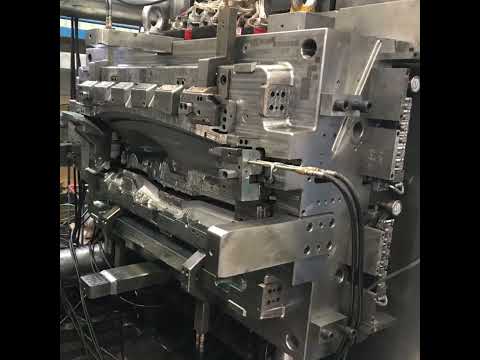
For an automotive plastic parts manufacturer, multi-cavity molds for high-speed production are about maximizing output per cycle without sacrificing critical tolerances. You might run eight or sixteen cavities for a simple clip or connector housing, but careful gate balancing is non-negotiable to avoid short shots or flash at high injection speeds. These molds often incorporate hot runner systems with individually controlled valve gates, allowing you to adjust fill rates per cavity for consistent density. A hardened tool steel or advanced coating on cores and cavities reduces wear from fast cycling and glass-filled resins. Quick-change insert blocks let you swap out a damaged cavity without pulling the whole tool, keeping downtime minimal.
| Aspect | Approach for High-Speed Production |
|---|---|
| Cavity Count | Eight to sixteen for smaller parts; balanced layout |
| Gate Control | Individually sequenced hot runner valve gates |
| Wear Protection | Hardened tool steel or PVD coatings on cavity surfaces |
| Maintenance | Quick-change cavity inserts for fast replacement |
Preventative Maintenance Schedules to Minimize Downtime

For an automotive plastic parts manufacturer, a rigorously enforced preventative maintenance schedule directly mitigates costly production interruptions. By systematically inspecting hydraulic systems, hot runner controls, and mold cooling channels at predetermined intervals, you preempt flash, short shots, and sticking issues that force unscheduled stops. Scheduling these interventions during planned changeovers ensures tooling integrity without sacrificing uptime. Prioritizing predictive maintenance intervals based on cycle counts rather than calendar days optimizes part quality consistency and extends tool life, making unplanned downtime a rare exception rather than a routine loss.
Emerging Trends: 3D Printing and Smart Plastics in Auto Design
At the manufacturer’s design lab, selective laser sintering of carbon-fiber nylon now produces a complex intake manifold in hours, bypassing the weeks required for steel tooling. This shift lets engineers test fit and airflow on the same production floor where traditional injection molding once dominated. Smart plastics with embedded microcapsules now autonomously seal hairline cracks behind a scuffed bumper, reducing warranty claims by enabling self-repair at the panel level. These materials change color under strain, letting a quality inspector see a stress point before it becomes a failure. Meanwhile, the same manufacturer prints custom snap-fit brackets for low-volume EV battery enclosures, avoiding the cost of dedicated molds while maintaining flame-retardant compliance. The line between prototype and production has blurred—now, a printer’s nozzle can lay down conductive traces directly onto a dashboard trim piece, eliminating secondary assembly steps.
Additive Manufacturing for Rapid Prototyping of Custom Parts
For an automotive plastic parts manufacturer, additive manufacturing for rapid prototyping of custom parts slashes lead times from weeks to hours, enabling iterative design validation directly on production-grade thermoplastics like UHMWPE or carbon-fiber nylon. Engineers can physically test fit, form, and function of intricate ducting or brackets before committing to hard tooling. This process allows overnight fabrication of multiple design variants for real-world assembly trials, eliminating costly mold modifications. Direct digital prototyping streamlines approval cycles, letting you refine complex geometries without minimum order quantities.

Additive manufacturing for rapid prototyping of custom parts lets automotive manufacturers iterate designs instantly, test real-world performance on production materials, and slash development cycles—all without the expense of hard tooling.
Self-Healing Polymers and Embedded Sensors in Future Models
Imagine your car’s plastic bumper fixing a scratch overnight. Self-healing polymers and embedded sensors in future models make this possible by using microcapsules that release healing agents when damaged, while integrated sensors constantly monitor structural health. A dashboard alert could tell you, “Bumper scratch healed at 3 AM,” or notify you of early fatigue in a plastic bracket before it fails. This means fewer trips to the shop, though the real magic is in how the sensor network decides which repairs to prioritize.
- Microcapsules of healing agents are embedded in the plastic for automatic repair of surface cracks.
- Thin-film sensors relay real-time data on impact locations and material stress levels.
- Self-repair cycles can be triggered multiple times in the same area before needing replacement.
